IPv6 Subnet-Router anycast dataset: Routing loops
This page presents details on IPv6 routing loops and amplification of looping packets. We provide plots on the number of looping /64 subnets per router IP address, amplification factors, and an explanation of the emergence of routing loops as well as guidance to fix routing loops. You can check whether your network is affected.
Number of /64 subnets and ASes affected by routing loops and amplification
417M
/64 subnets that trigger routing loops
887k
/64 subnets that trigger amplification
6.6k
ASes affected by routing loops
1.6k
ASes affected by amplification
Check if your network is affected
Routing loops and amplification in IPv6
The following plots and metrics summarize our findings on routing loops and amplification in IPv6 networks.
Global distribution of IPv6 routing loops
This world-map shows the geographic distribution of IPv6 routing loops with aggregated information on the number of affected ASes, IPv6 router addresses, looping, and amplifying subnets. The color is based on the number of looping subnets per country.
Global status of amplification factors
This world-map shows countries not affected by the amplification bug (gray), as well as countries that show low amplification factors (orange) or critical amplification factors >10 (red).
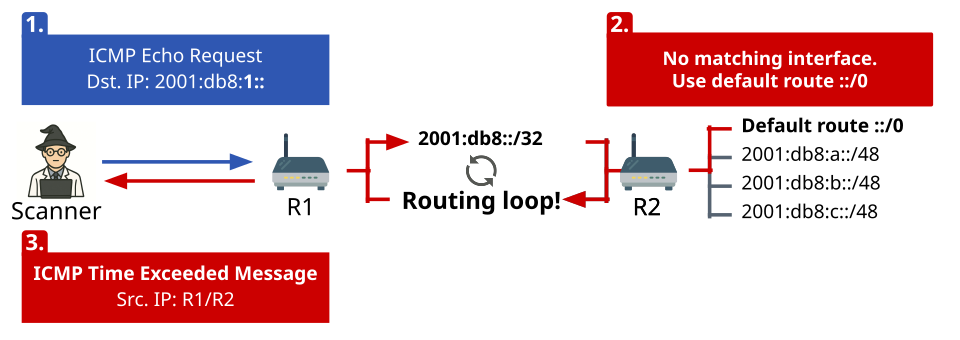
Problem: Missing NULL routes in combination with default routes can lead to routing loops
Routing loops can emerge when a provider assigns provider aggregated (PA) address space to a customer, and this customer uses default routing and only parts of the address space without configuring NULL routes for the unused subnets.
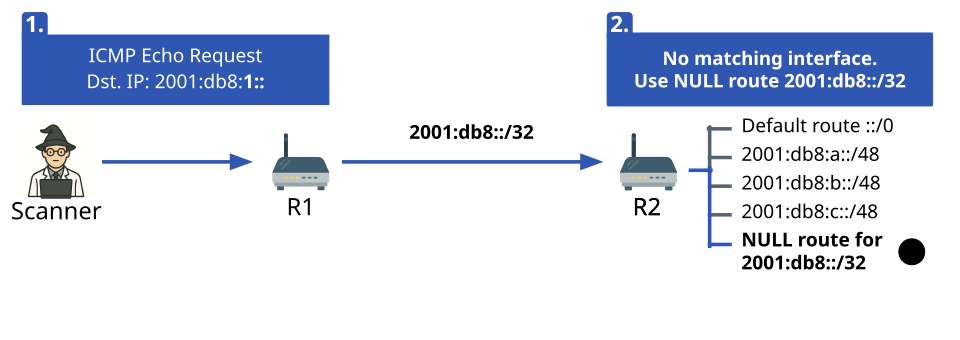
Solution: Set NULL routes to prevent routing loops!
To prevent routing loops, it is advised to set NULL routes for all unused subnets of the assigned address space, if you deploy default routes.
Critical side observation: Routing loops might trigger amplification.
Some routers incorrectly duplicate ICMP Echo packets. In case of routing loops, this amplifies the number of ICMP Time Exceeded messages. This behavior has been confirmed for some products of major router vendors. Therefore, it is even more important to prevent routing loops upfront.
Powered by



External data providers